
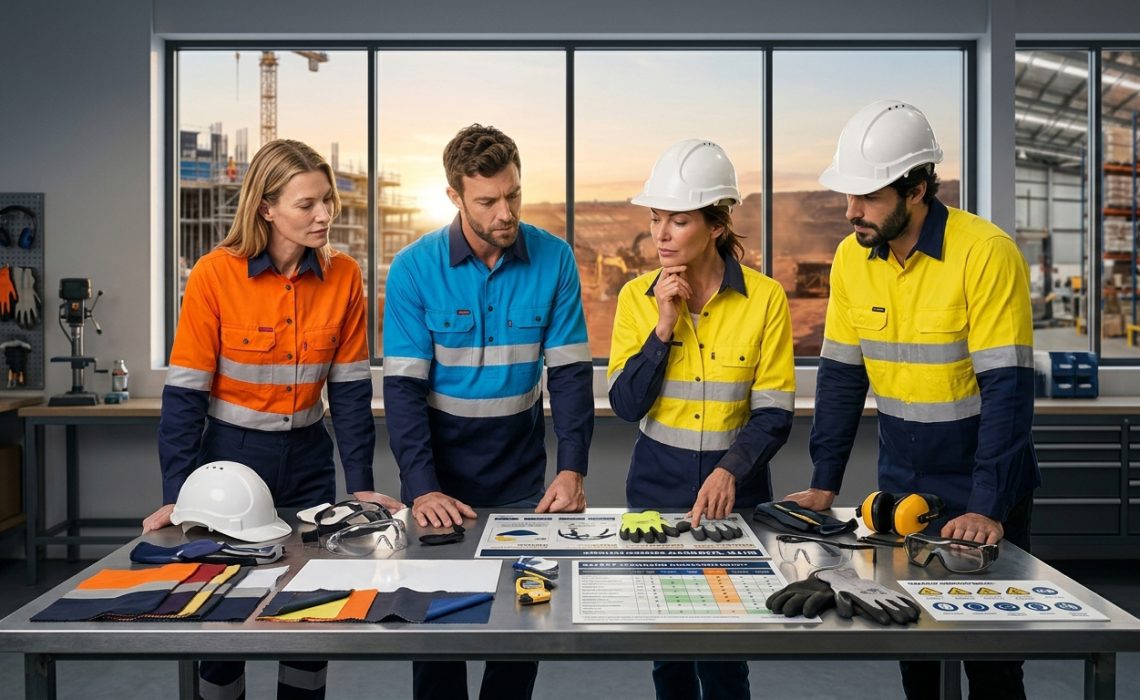

Choosing the right personal protective equipment (PPE) and workwear is an important part of creating a safer, more comfortable and productive workplace. Whether your business operates in construction, mining, manufacturing, transport or another industry, providing suitable protective clothing and equipment helps workers perform their jobs with greater confidence.
However, with so many products available, knowing which workwear and safety equipment your team needs can be challenging. Different workplaces have different hazards, environmental conditions and operational requirements, so choosing the right products requires careful consideration.
At Site Ware Direct, we understand the importance of finding workwear and PPE suited to your team’s needs. In this guide, we explain how to choose the right workplace safety equipment, what to consider before purchasing, and how to find suitable solutions for your industry.
1. Assess Your Workplace Hazards and Requirements
Before purchasing workwear or PPE, start by identifying the hazards your employees may encounter during their daily tasks.
Every workplace is different. Construction workers may face falling objects, moving machinery and outdoor weather conditions, while manufacturing employees may work around equipment, noise, chemicals or sharp materials.
Conducting a workplace risk assessment helps you identify potential hazards and determine what protective measures are necessary.
Consider the following factors:
- Physical hazards: Moving machinery, falling objects, sharp edges and impact risks.
- Environmental conditions: Heat, cold, rain, dust and poor visibility.
- Chemical hazards: Exposure to hazardous substances, splashes or airborne contaminants.
- Noise exposure: Equipment and machinery that may require hearing protection.
- Manual tasks: Activities that may require suitable gloves, footwear or other task-specific protection.
Once you understand the risks, you can make more informed decisions about the protective equipment and workwear your team requires.
Remember that PPE should be selected as part of a broader workplace risk management approach, rather than as a substitute for eliminating hazards or implementing other appropriate control measures.
2. Understand the Difference Between PPE and Workwear
Although PPE and workwear are often discussed together, they serve different purposes.
What is PPE?
Personal protective equipment is designed to protect workers from identified workplace hazards. Depending on the task and risk assessment, PPE may include:
- Safety helmets and hard hats
- Safety glasses and protective eyewear
- Hearing protection
- Protective gloves
- Respiratory protective equipment
- Safety footwear
- Protective clothing and high-visibility garments
The correct equipment depends on the hazards present, the level of exposure and the relevant safety requirements.
Explore the range of PPE products to find equipment suited to different workplace needs.
What is workwear?
Workwear includes clothing designed for everyday work activities. Depending on the role, it may include work shirts, trousers, jackets, overalls, polos and uniforms.
Suitable workwear can help employees remain comfortable throughout the working day while supporting durability, professional presentation and practical job requirements.
Some workwear also provides protective features, such as high-visibility materials, flame-resistant properties or specialised fabric construction. These features should be selected according to the hazards and applicable requirements of the workplace.
Browse the workwear selection to explore clothing options for your team.
3. Choose Workwear and PPE Suited to Your Industry
One of the most important considerations when selecting workplace clothing and safety equipment is the industry in which your business operates.
Different industries have different working conditions, hazards and equipment requirements. Choosing products that reflect these differences can help businesses make more appropriate purchasing decisions.
Construction and Trades
Construction workers and tradespeople may work around machinery, vehicles, tools, elevated work areas and changing weather conditions.
Depending on the task, suitable workwear and PPE may include high-visibility clothing, protective eyewear, safety footwear, helmets, gloves and hearing protection.
The specific equipment required should be determined by the hazards associated with each job and the requirements of the worksite.
Explore our construction and trades solutions to find workwear and safety equipment relevant to this industry.
Mining
Mining environments can involve demanding working conditions, heavy machinery, dust, noise and remote work locations.
Workers may require durable workwear, high-visibility garments and task-specific protective equipment. Additional protection may be necessary depending on the site, job responsibilities and identified hazards.
When selecting products for mining operations, consider durability, comfort, compatibility with other PPE and the applicable site requirements.
Discover our mining workwear and PPE solutions for equipment suited to mining-related work environments.
Industrial and Manufacturing Workplaces
Industrial facilities and manufacturing environments may expose employees to machinery, noise, sharp materials, heat or hazardous substances.
The appropriate combination of workwear and PPE depends on the specific processes being performed.
For example, some tasks may require protective gloves and safety glasses, while others may require hearing protection, specialised clothing or respiratory equipment.
Review the hazards associated with each role before choosing products, and ensure that equipment is compatible with other protective items being worn.
Learn more about our industrial workwear and PPE solutions.
Transport and Logistics
Transport, warehousing and logistics operations can involve vehicle movements, manual handling, loading activities and work in outdoor or low-light conditions.
Depending on the environment, workers may need high-visibility clothing, suitable safety footwear, gloves and other task-specific PPE.
Comfort and mobility are also important considerations, particularly for employees who spend long periods standing, walking or handling goods.
Explore the industries served by Site Ware Direct to find solutions relevant to your business.
4. Select the Right PPE for Each Task
Once you understand your workplace hazards, the next step is to identify the types of protective equipment required for each task.
Different PPE products protect against different risks. Choosing the right item means considering its intended purpose, fit, performance and compatibility with other equipment.
Head Protection
Safety helmets may be necessary in workplaces where workers face identified head injury risks, such as falling objects or impact hazards.
When choosing head protection, consider the workplace requirements, fit, compatibility with accessories and manufacturer instructions.
Eye and Face Protection
Safety glasses, goggles and face shields provide different forms of protection.
The appropriate option depends on the hazard, such as flying particles, dust, chemical splashes or other potential eye and face injuries.
Ensure that the selected equipment is suitable for the specific task and provides the required level of protection.
Hearing Protection
Workers exposed to hazardous noise may require hearing protection, such as earplugs or earmuffs.
Selection should consider noise exposure, the required level of attenuation, comfort and compatibility with other PPE.
Hearing protection should form part of an appropriate noise management strategy.
Hand Protection
Protective gloves are available for a variety of workplace tasks, including handling materials, working with certain chemicals and performing mechanical work.
Not all gloves provide the same protection. Consider the materials being handled, the risks involved, dexterity requirements and the manufacturer’s guidance before selecting a suitable pair.
Safety Footwear
Safety footwear may help protect workers against hazards such as impact, compression, punctures and slipping, depending on the footwear’s design and rating.
Consider the working surface, environmental conditions, fit, comfort and any specific site requirements.
Respiratory Protection
Some workplaces may require respiratory protective equipment when workers are exposed to hazardous airborne contaminants.
The appropriate equipment depends on the contaminant, exposure conditions and required protection. Respiratory protection must be selected and used correctly, including appropriate fit testing where required.
For all PPE categories, consult the relevant risk assessment, product specifications and applicable Australian requirements before purchasing.
5. Check Australian Standards and Workplace Safety Requirements
When purchasing PPE and workwear in Australia, it is important to check whether the products meet the applicable requirements for their intended use.
Some products must meet specific Australian or other accepted standards, depending on the equipment type, workplace hazard and relevant regulations.
Before purchasing, consider the following:
- Product specifications: Confirm the intended use and protective capabilities of the product.
- Applicable standards: Check which standards or technical requirements apply to the specific hazard and equipment.
- Certification and documentation: Review available evidence that the product meets the required specifications.
- Manufacturer instructions: Follow guidance on correct use, fit, maintenance, storage and replacement.
- Workplace requirements: Check any additional requirements imposed by your site, industry or work procedures.
For example, high-visibility garments may need to meet requirements appropriate to the work environment, while safety footwear and eye protection must be suitable for the hazards they are intended to address.
Avoid assuming that all products in the same category offer equivalent protection. Check the actual specifications of each item.
Australian businesses should also consult relevant workplace health and safety legislation, regulator guidance and applicable standards to determine their obligations.
6. Balance Comfort, Durability and Cost
Price is an important consideration when purchasing workwear and PPE, particularly for businesses buying for multiple employees. However, the cheapest option may not always provide the best long-term value.
A product’s suitability, durability, comfort and expected service life should all be considered.
Prioritise Fit and Comfort
Poorly fitting workwear can restrict movement, while uncomfortable PPE may discourage correct use.
Look for suitable sizing, adjustable features and designs that allow employees to perform their tasks comfortably without compromising protection.
Where possible, consider employee feedback before placing large orders.
Consider Durability
Workwear used in demanding environments needs to withstand the conditions in which it will be worn.
Check fabric construction, stitching, reinforcement and care instructions. For PPE, follow the manufacturer’s guidance on inspection, maintenance and replacement.
Choosing suitable products from the beginning can help businesses manage ongoing replacement costs.
Think About Total Cost
When comparing products, consider more than the initial purchase price.
Factors such as expected lifespan, cleaning requirements, replacement frequency and product suitability can influence the overall cost of supplying your team.
For larger orders, consistency in sizing, product availability and repeat purchasing can also make procurement easier.
7. Make Workwear Procurement Easier for Your Team
For businesses with multiple employees or locations, purchasing workwear and PPE can become a complex process.
A structured procurement approach can help simplify ordering and ensure that employees receive appropriate products.
Here are several practical ways to improve the process.
Create a list of required items. Document the workwear and PPE needed for each role or task, based on the relevant risk assessments and workplace requirements.
Standardise suitable products. Where appropriate, use consistent products across similar roles to simplify purchasing, stock management and replacement.
Maintain accurate sizing information. Keep employee sizing records up to date and provide a suitable process for confirming sizes before ordering.
Monitor stock levels. Identify frequently used items and plan replenishment before essential supplies run out.
Review products regularly. Reassess equipment when work tasks, hazards, regulations or product specifications change.
Choose a suitable supplier. Consider product range, availability, ordering processes, customer support and the ability to meet your business requirements.
For businesses managing larger teams, a reliable procurement process can reduce administrative work and make it easier to maintain consistent workwear supplies.
8. Use This Checklist Before Buying PPE and Workwear
Before placing your next order, review the following checklist.
- Identify the hazards associated with each role and task.
- Determine the appropriate protective equipment and workwear.
- Check the applicable standards and workplace requirements.
- Confirm product specifications and intended use.
- Select suitable sizes, fits and designs.
- Ensure that different PPE items are compatible.
- Consider durability, comfort and total cost.
- Review maintenance, inspection and replacement requirements.
- Confirm quantities, stock availability and delivery arrangements.
- Establish a process for reviewing and replenishing supplies.
Using this checklist can help your business approach workwear and PPE purchasing more systematically. It does not replace a formal risk assessment or any required professional safety advice.
Frequently Asked Questions About PPE and Workwear
What is the difference between PPE and workwear?
PPE is designed to protect workers from identified workplace hazards, while workwear generally refers to clothing worn for work. Some workwear also provides protective functions, such as high visibility or specialised resistance properties. The correct choice depends on the job and its associated risks.
How do I know which PPE my employees need?
Start by identifying workplace hazards and assessing the risks associated with each task. Determine the necessary protective measures, then select suitable PPE based on the risk assessment, applicable requirements, product specifications and manufacturer instructions.
What PPE is commonly used in construction?
Depending on the task and site requirements, construction PPE may include safety helmets, protective eyewear, high-visibility clothing, safety footwear, gloves and hearing protection. Additional equipment may be necessary for particular hazards.
How often should workwear and PPE be replaced?
Replacement frequency depends on the product, its condition, frequency of use, exposure to hazards and manufacturer recommendations. Inspect equipment as required, follow maintenance instructions and replace items that are damaged, worn out, contaminated or no longer suitable for their intended purpose.
Can businesses order workwear and PPE in bulk?
Yes. Businesses can arrange bulk purchasing for teams, departments or multiple locations. Before ordering, confirm product specifications, quantities, sizes, stock availability and delivery requirements.
Where can I find workwear and PPE for my industry?
You can explore the Site Ware Direct Industries page to find solutions for different workplace environments, or browse our PPE range and workwear selection to explore available products.
Find the Right Workwear and PPE for Your Workplace
Choosing suitable workwear and personal protective equipment starts with understanding your workplace hazards, the tasks your employees perform and the protection they need.
From construction and mining to industrial operations and logistics, selecting appropriate products can help your business support workplace safety, employee comfort and more efficient procurement.
At Site Ware Direct, we provide workwear, PPE and safety products for businesses across Australia.
Explore our workwear and PPE products or visit our Industries page to discover solutions relevant to your workplace.
Need help finding suitable products for your team? Contact Site Ware Direct to discuss your workwear and PPE requirements.