
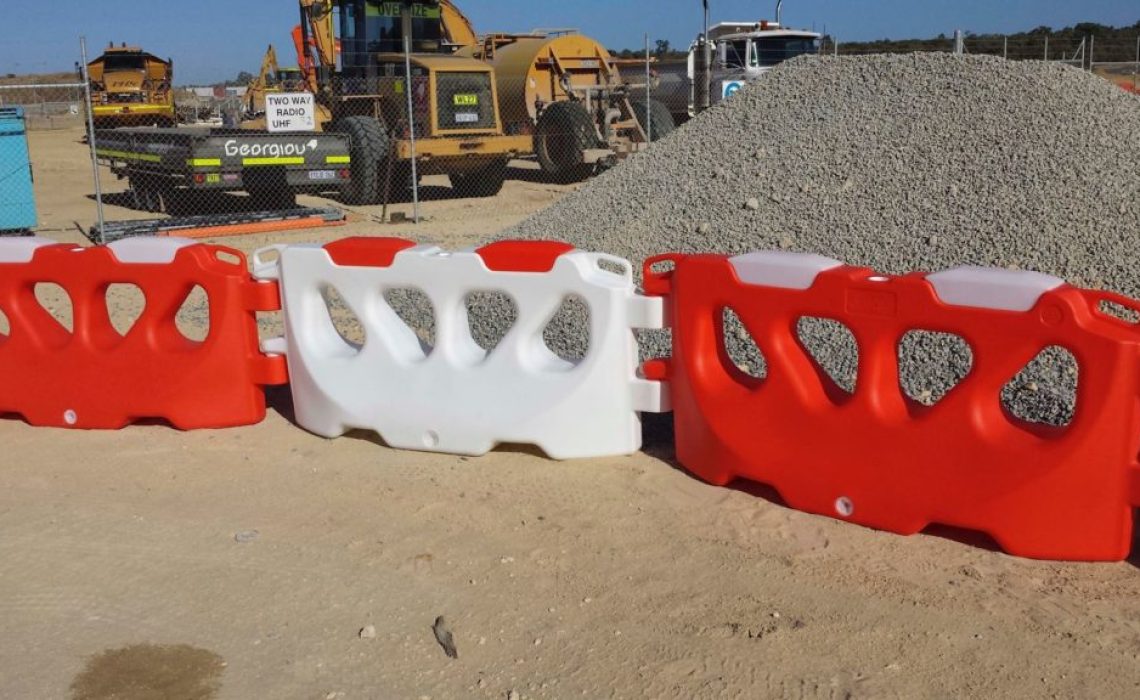

Barricading plays an important role in managing hazards, controlling access and establishing clear boundaries around work areas. From construction sites and mining operations to civil infrastructure projects and industrial facilities, the right barricading system helps businesses separate workers and pedestrians from potentially hazardous areas.
However, not all barricades are designed for the same purpose. Some provide a simple visual warning, while others create a more substantial physical barrier around restricted work zones, excavations, equipment or site perimeters.
Choosing the right barricading solution depends on the type of hazard, the level of access control required, the site environment and how frequently the work area changes.
In this guide, we explore the different types of barricading barriers, their common applications and what Australian businesses should consider when selecting a suitable system.
What Is Barricading?
Barricading is the use of barriers and boundary systems to restrict access, separate people from hazards and help control movement within a workplace or public area.
Depending on the application, barricading can be temporary or semi-permanent and may range from lightweight warning systems to heavy-duty physical barriers.
Barricading is commonly used to:
- Establish exclusion zones around hazardous work areas.
- Restrict unauthorised access to construction or maintenance activities.
- Separate pedestrians from vehicles, machinery or equipment.
- Control pedestrian movement at events and busy facilities.
- Define work areas around trenches, excavations and infrastructure projects.
- Secure site perimeters and designated access points.
The purpose of barricading is not simply to mark a boundary. The system needs to suit the hazard and provide an appropriate level of separation and access control.
Why Is Barricading Important on Worksites?
Active worksites can change throughout the day as equipment moves, maintenance activities begin and hazards develop. Without clearly defined boundaries, workers, contractors and visitors may unintentionally enter areas where additional risks are present.
Suitable barricading helps make restricted areas more visible and establishes a physical or visual boundary around the work being performed.
1. Establish Clear Exclusion Zones
Exclusion zones help keep people away from hazards such as excavations, maintenance activities, operating equipment and restricted work areas.
A clearly positioned barricade can communicate that an area is restricted and help prevent accidental entry.
2. Improve Site Access Control
Barricading can help separate authorised work areas from general pedestrian routes, public access points and other operational areas.
Where access is required, compatible gates can provide designated entry and exit points without leaving an uncontrolled gap in the barrier line.
3. Support Safer Worksite Organisation
A well-planned barricading layout helps workers understand where activities are taking place and which areas they should avoid.
This can be particularly useful on large construction, mining and civil infrastructure sites where multiple teams may be working at the same time.
4. Adapt to Changing Site Conditions
Some work zones need to be relocated as a project progresses. Modular and reusable barricading systems can be assembled, dismantled and reconfigured to suit changing site layouts.
Businesses should still inspect barricades regularly and reposition them when work activities or hazards change.
Types of Barricading Barriers and Their Uses
Different barricading systems provide different levels of visibility, separation and access control. Understanding these differences can help businesses select a solution that suits the job.
1. Heavy-Duty Hard Barricading
Heavy-duty hard barricading is designed to establish clearly defined physical boundaries around work areas and exclusion zones. These systems are commonly used in mining, construction, civil infrastructure and resource operations.
The Eureka Hard Barricading System uses components such as heavy-duty barricade poles and A-frame legs to create a configurable barrier line. Different pole lengths and leg arrangements can help accommodate straight runs, corners and changing site layouts.
Depending on the configuration, gates can also be incorporated to create designated access points.
Common applications include:
- Trenching and excavation work zones.
- Maintenance and shutdown activities.
- Restricted access areas.
- Plant and equipment work zones.
- Mining and civil construction sites.
When selecting hard barricading, consider the size of the exclusion zone, the required layout, the number of access points and how frequently the system will need to be moved.
Explore the Eureka Barricades range at Site Ware Direct to view available components and system options.
2. Temporary Fencing
Temporary fencing is commonly used when a larger area needs to be enclosed or access to a site perimeter needs to be restricted.
Fence panels are connected and supported by compatible components to create a continuous boundary. Depending on the system, additional accessories such as feet, stays, clamps and access gates may be required.
Common applications include:
- Construction site perimeters.
- Civil infrastructure projects.
- Temporary work compounds.
- Restricted maintenance areas.
- Temporary pedestrian and vehicle access control.
Temporary fencing may be more suitable than individual barricade poles when the objective is to enclose a broader area rather than simply mark an internal exclusion zone.
The appropriate configuration depends on the site conditions, expected loads, access requirements and any applicable fencing specifications.
3. Crowd Control Barriers
Crowd control barriers are portable barriers designed to guide pedestrian movement, define boundaries and restrict access to designated areas.
Interlocking steel panels can create a continuous barrier line while allowing sections to be connected, repositioned and stored when not in use.
Common applications include:
- Public events and gatherings.
- Queuing and pedestrian management.
- Facility access control.
- Temporary work areas in public-facing environments.
- Separating pedestrians from designated operational zones.
Crowd control barriers are useful where pedestrian movement needs to be directed. However, they should not automatically be treated as substitutes for heavy-duty exclusion barriers or traffic protection systems.
Choose a system based on the expected crowd conditions, site layout and level of separation required.
4. Water-Filled Barriers
Water-filled barriers are relocatable barriers that can be transported and positioned before being filled to increase their weight and stability.
Depending on the product design and intended application, they can help define temporary boundaries and separate traffic or pedestrian areas.
Common applications may include:
- Temporary traffic separation.
- Roadside work zones.
- Infrastructure maintenance.
- Temporary site boundaries.
- Event and facility traffic management.
When considering water-filled barriers, check the manufacturer’s guidance on filling, placement, connection, stability and suitability for the intended application.
They should not be assumed to provide vehicle-impact protection unless the specific product has been tested and approved for that purpose.
5. Barrier Boards and Expandable Barriers
Barrier boards and expandable barriers provide practical options for marking hazards, restricting access to small areas and communicating that work is taking place.
Depending on the product, these may be quick to deploy and easy to reposition when access requirements change.
Common applications include:
- Maintenance and repair work.
- Temporary access restrictions.
- Indoor facility maintenance.
- Small work zones.
- General hazard marking.
These options can be useful for short-duration tasks, but the required level of protection should determine whether a lightweight warning barrier is sufficient or a stronger physical system is necessary.
Hard Barricading vs Temporary Fencing: What’s the Difference?
Hard barricading and temporary fencing can both help restrict access, but they are generally used for different site requirements.
| Feature | Heavy-Duty Hard Barricading | Temporary Fencing |
|---|---|---|
| Main purpose | Define internal exclusion zones and restricted work areas | Enclose larger areas or establish site perimeters |
| Typical setup | Poles supported by compatible barricade legs | Connected fence panels with suitable supports |
| Layout | Modular and configurable around work zones | Suitable for continuous perimeter runs |
| Access | Gates can be incorporated into compatible systems | Pedestrian or vehicle access gates may be available |
| Common applications | Excavations, maintenance and plant work zones | Construction perimeters, compounds and restricted sites |
| Key consideration | Layout, visibility, stability and required separation | Perimeter coverage, ground conditions, stability and access |
The right choice depends on the worksite and the hazard being managed. In some situations, a project may need both systems: temporary fencing to secure the outer perimeter and hard barricading to separate specific hazards inside the site.
How to Choose the Right Barricading System
Before purchasing barricading, consider how the system will be used and what it needs to achieve.
1. Identify the Hazard
Start by identifying the hazard and the consequences of someone entering the area.
A small maintenance zone may require a different solution from an excavation, an area containing moving plant or a restricted industrial work zone.
Consider whether the barricade needs to provide a visual warning, prevent casual access, establish a physical boundary or meet a specific site requirement.
2. Determine the Required Level of Separation
Not every hazard can be managed with the same type of barrier.
Lightweight barriers may be appropriate for some temporary access restrictions, while higher-risk work areas may require a substantial physical barricade or secure perimeter fencing.
Where a barrier must withstand specific forces or protect against vehicle impact, confirm that the selected system is designed and rated for that application.
3. Consider the Site Environment
Worksite conditions can influence the type of barricading required.
Consider the ground surface, available space, weather exposure, vehicle movements and whether the barrier will be used indoors or outdoors.
The system should be suitable for the conditions in which it will be installed and used. Follow the manufacturer’s installation instructions and any site-specific requirements.
4. Plan Access Points
Workers may need to enter a restricted area to carry out inspections, repairs or maintenance.
Where access is necessary, consider a compatible gate or designated entry point that allows authorised personnel to enter without creating an uncontrolled opening.
The access arrangement should fit the site’s procedures and the nature of the work being performed.
5. Consider Reusability and Storage
For projects where work zones change frequently, a modular barricading system may offer practical advantages.
Check whether components can be dismantled, transported and stored efficiently between jobs. Consider the availability of compatible replacement parts and accessories when planning future requirements.
6. Check Standards and Site Requirements
Some barricading applications are subject to specific standards, project specifications, traffic management requirements or workplace procedures.
Confirm the applicable requirements for the intended use before selecting a product. Do not assume that every barricade is suitable for every hazard or that a general-purpose barrier meets a particular compliance requirement.
Why Choose Eureka Hard Barricading?
Eureka Barricade Systems supplies barricading solutions for demanding work environments, including mining, construction, civil infrastructure and resource operations.
The hard barricading range is designed around configurable components that can be assembled to establish exclusion zones and adjusted to suit different site layouts.
Key features of the system include:
- Modular configurations: Compatible poles and barricade legs can be arranged to suit different work-zone layouts.
- High visibility: Visible barrier components help make restricted areas easier to identify.
- Heavy-duty construction: Components are designed for demanding worksite environments.
- Access options: Compatible gate sets can provide designated entry points.
- Reusable components: Systems can be dismantled and reconfigured when work areas change.
The right configuration depends on the site, the hazard and the level of separation required.
Explore the Eureka Barricades range from Site Ware Direct or view the Eureka Hard Barricading range for more product information.
Barricading Accessories and Components
A barricading system often requires more than the main barrier itself. Compatible components help create a practical layout, support access requirements and make equipment easier to manage.
Depending on the system, useful components may include:
- Barricade poles: Used to establish the barrier line in compatible hard barricading systems.
- A-frame barricade legs: Support and connect the poles in different configurations.
- Barricading gates: Create designated access points for authorised personnel.
- Fence panels and supports: Help establish temporary perimeter fencing.
- Clamps and connectors: Join compatible fencing components.
- Storage stillages: Help organise and transport equipment between work areas.
Before ordering accessories, check compatibility with the chosen barricading system and confirm the quantity needed for the planned layout.
You can browse the full Barricading and Barriers range at Site Ware Direct to explore available products and components.
Barricading Checklist for Worksite Managers
Before setting up a barricade, use this checklist to help confirm that the system is suitable for the task.
- Identify the hazard and the level of access restriction required.
- Select a barrier system appropriate for the intended application.
- Check site rules, relevant standards and project specifications.
- Plan the layout and any required access gates.
- Install and secure components according to the manufacturer’s instructions.
- Make the restricted area clearly identifiable.
- Inspect the barricade for damage, movement or missing components.
- Review the arrangement whenever the work area or hazard changes.
This checklist is a practical starting point, not a substitute for a site-specific risk assessment or required traffic management plan.
Frequently Asked Questions About Barricading
What is the purpose of a barricading barrier?
A barricading barrier helps define boundaries, restrict access and separate people from hazards or designated work areas. The type of barrier required depends on the hazard and the level of separation needed.
What is the difference between hard barricading and barrier tape?
Barrier tape mainly provides a visual warning and marks a boundary. Hard barricading provides a more substantial physical barrier. The appropriate option depends on the risk assessment and whether people need to be physically prevented from entering an area.
Where is heavy-duty barricading commonly used?
Heavy-duty barricading is commonly used on mining, construction, civil infrastructure and industrial sites to define exclusion zones around hazards, maintenance work, excavations and restricted areas.
Can hard barricading be reused?
Compatible modular systems can generally be dismantled and reconfigured for different work areas, provided the components remain in suitable condition and are used according to the manufacturer’s instructions.
When should I use temporary fencing instead of hard barricading?
Temporary fencing is often appropriate when a larger area or site perimeter needs to be enclosed. Hard barricading is often used to define internal exclusion zones. Some sites may require both.
How do I know which barricading system my site needs?
Start with a risk assessment and identify the hazard, access requirements and level of separation needed. Then check the applicable site specifications and manufacturer’s product information before selecting a suitable system.
Find the Right Barricading Solution for Your Worksite
Choosing the right barricading system helps businesses establish clearer boundaries, manage access and organise work areas around identified hazards.
Whether you need heavy-duty hard barricading for a mining or construction site, temporary fencing for a project perimeter or crowd control barriers for pedestrian management, the system should be selected according to the intended application and site requirements.
At Site Ware Direct, we supply a range of barricading products and solutions to support Australian worksites.
Explore our Barricading and Barriers range, browse Eureka Barricades or visit Eureka Systems’ Hard Barricading page to find a suitable starting point for your project.
Need help choosing barricading for your site? Contact the Site Ware Direct team to discuss your requirements and explore available options.